
The Anglican Church of Melanesia (ACoM) formally opened its 18th General Synod at the Melanesian Brotherhood (MBH) Central Headquarters this morning (Sunday 15th November 2026), with Archbishop and Primate the Most Rev. Leonard Dawea challenging the Church to chart a self-reliant future as it enters its second half-century of autonomy. 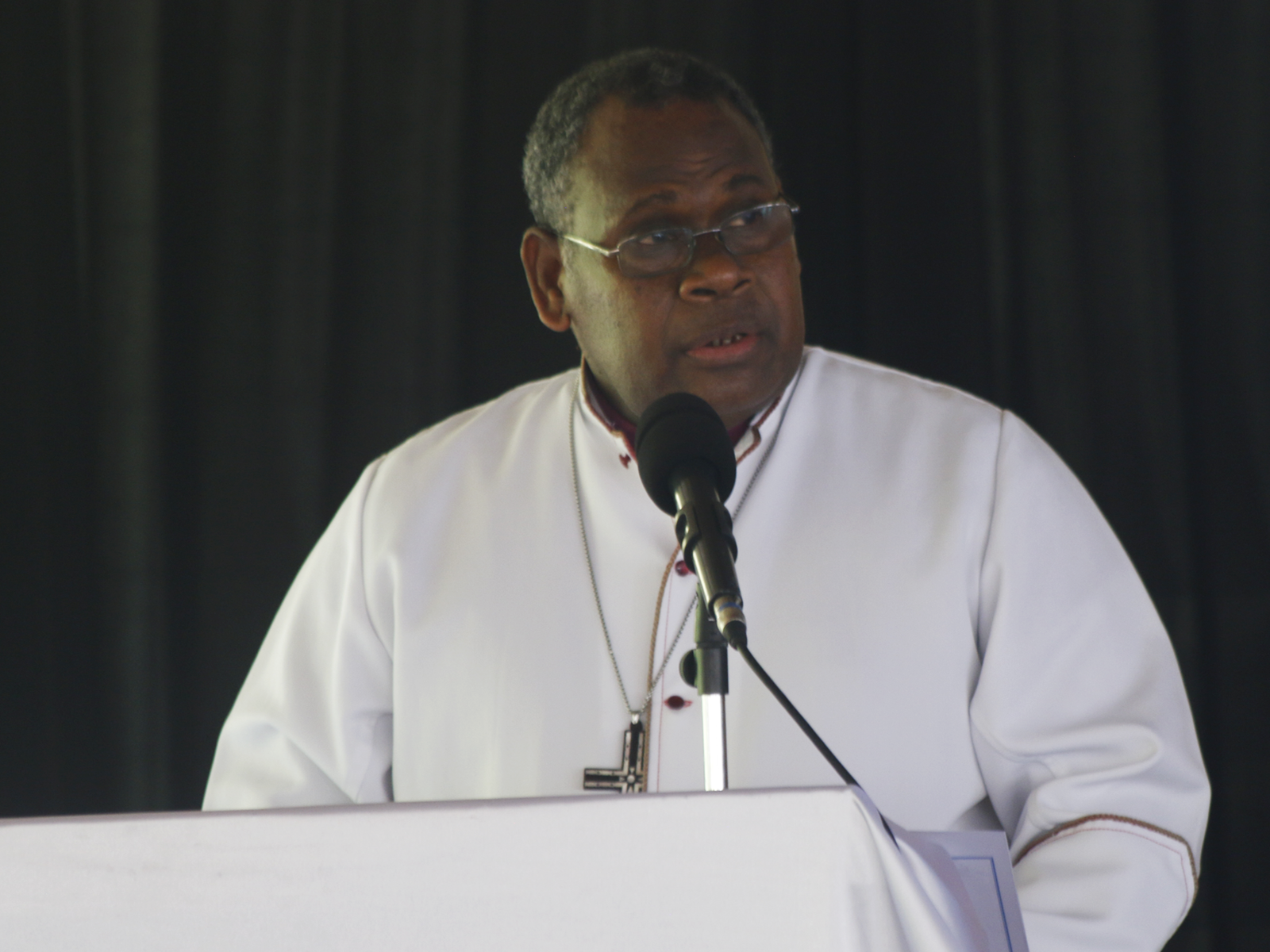
Running from November 14 to 19 under the theme “Talk, Listen, Witness,” the gathering marks ACoM’s first General Synod following its 2025 Golden Jubilee celebrations. Addressing bishops, clergy, laity, and international dignitaries, Archbishop Dawea framed the week-long deliberations not as a “political parliament or a corporate board meeting,” but as a sacred space for prayerful discernment.
“We stand today on the bricks our ancestors laid while laying our own bricks for the future generation,” Archbishop Dawea stated, urging delegates to ask themselves what kind of “ancestor Church” they intend to pass on amidst modern societal pressures.
A Historic Welcome and International Ties
The opening ceremony drew high-level representation from across the Pacific and the wider Anglican Communion. Solomon Islands Governor General His Excellency the Rev. Sir David Tiva Kapu delivered the keynote address, while the Most Rev. Sione Uluilakepa, Archbishop of the Diocese of Polynesia, preached the opening sermon.
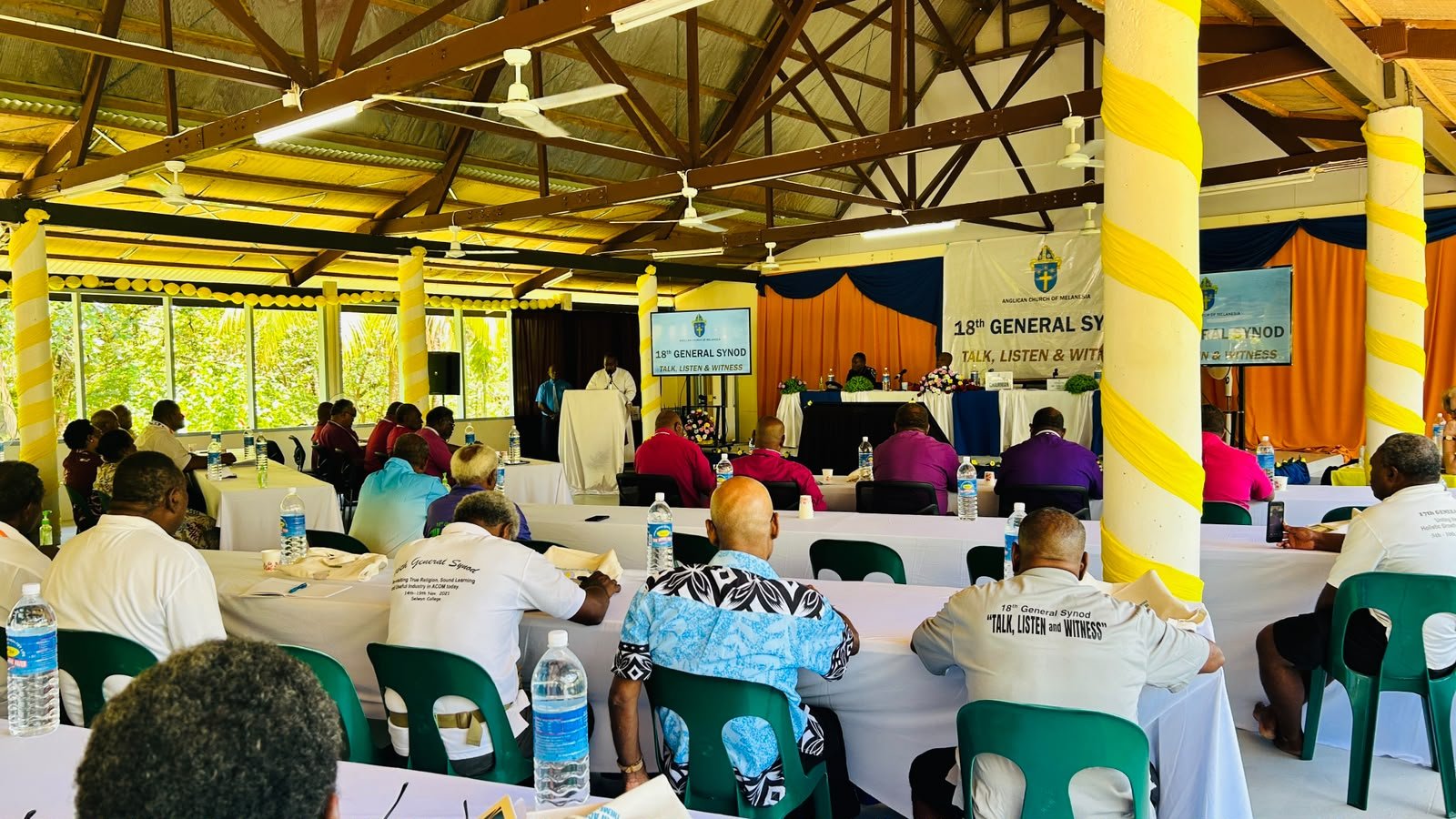
In a historic milestone for the province, Archbishop Dawea welcomed delegates from Noumea, New Caledonia—marking the territory’s first-ever participation in an ACoM General Synod. The Archbishop also announced that ACoM will formalize a new partnership memorandum with the Diocese of Polynesia in the Anglican Church in Aotearoa, New Zealand and Polynesia during the week’s proceedings.
The Push for Economic Self-Reliance
Evaluating the Church’s progress against the threefold philosophy of its founder, Bishop George Augustus Selwyn—True Religion, Sound Learning, and Useful Industry—Archbishop Dawea delivered a candid assessment of ACoM’s financial standing.
While praising the Church’s endurance in faith and its foundational role in national education, he noted that “useful industry” has largely remained “mere rhetoric” over the past 50 years. Currently, local revenue accounts for only about 20 percent of ACoM’s annual budget, leaving the province heavily dependent on grants from overseas partners such as the Melanesian Mission Trust Board (MMTB) and Melanesian Mission UK (MMUK).
“ACoM must be an industrious Church, one that is able to support its expanding mission frontiers, growing institutions and increasing administration,” the Archbishop said, calling on the Synod to adopt a clear, centralized strategic framework for financial self-reliance to buffer against global economic shifts.
Safeguarding Liturgical Identity
Turning to the spiritual life of the province, Archbishop Dawea issued a firm directive against unauthorized alterations to Anglican worship. While acknowledging the value of local contextualization, he warned against unqualified individuals translating liturgies, introducing unnecessary chants during Eucharistic prayers, or replacing traditional seasonal hymn tunes.
“Such irrelevant practices, if not stopped, risk distortion of the theological foundations, liturgical uniformity, and [are] contrary to our Anglican identity and faith,” he emphasized, noting that all liturgical developments and translations into Pijin or Bislama must be strictly vetted by the Faith and Order Commission.
Navigating Women’s Ordination and Youth Engagement
The Archbishop also addressed the long-standing, sensitive debate surrounding the ordination of women, which has stalled at the diocesan ratification stage since first passing General Synod in 2002. Revealing that the latest constitutional amendment bill was defeated by all 10 dioceses—including those that had previously supported it—Archbishop Dawea acknowledged that many women in the Church now feel “blamed and inferior” during synodical debates. He placed the issue squarely before the delegates to decide whether to draft a new bill, suspend discussions for prayerful discernment, or task theological colleges with independent awareness programs.
Simultaneously, he urged dioceses to stop treating youth ministry as an “appendix,” calling for equal funding and regular engagement to steer young people away from antisocial behavior.
Expanding Education and Theological Training
Addressing national development challenges, Archbishop Dawea noted that ACoM schools are facing severe overcrowding—a pressure expected to intensify with the rollout of the Solomon Islands Government’s Free Education policy. He called for the establishment of new ACoM schools and suggested integrating mandatory Technical and Vocational Education and Training (TVET) programs to prevent human resource wastage among school dropouts.
Regarding higher theological education, the Archbishop noted that while the physical relocation of Bishop Patteson Theological College (BPTC) from Kohimarama to the Kosu site faces further delays due to rising costs, international fundraising efforts are underway. Looking ahead, he proposed introducing a Master’s degree program in theology at BPTC once the move to Kosu is complete, aiming to eliminate academic bottlenecks for Melanesian scholars.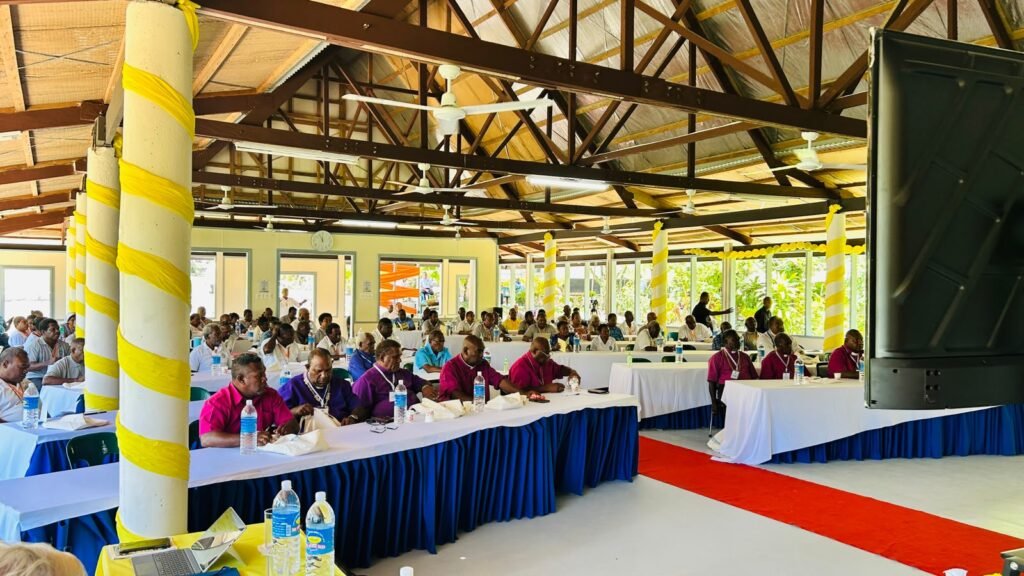
A Call to Environmental and Social Witness
In an era marked by climate change, destructive extractive industries, domestic violence, and proselytism from newer religious movements, Archbishop Dawea urged the Church to strengthen its holistic mission. Beyond operating safe houses like the Christian Care Centre, he challenged ACoM to actively lobby governments for stronger environmental protections and social justice.
Concluding his address, the Archbishop thanked the traditional landowners of Tabalia, the Melanesian Brotherhood, BPTC, and the surrounding Vatupilei community for hosting the gathering, before formally declaring the 18th General Synod open.
More than 90 synod members attended the synod.