
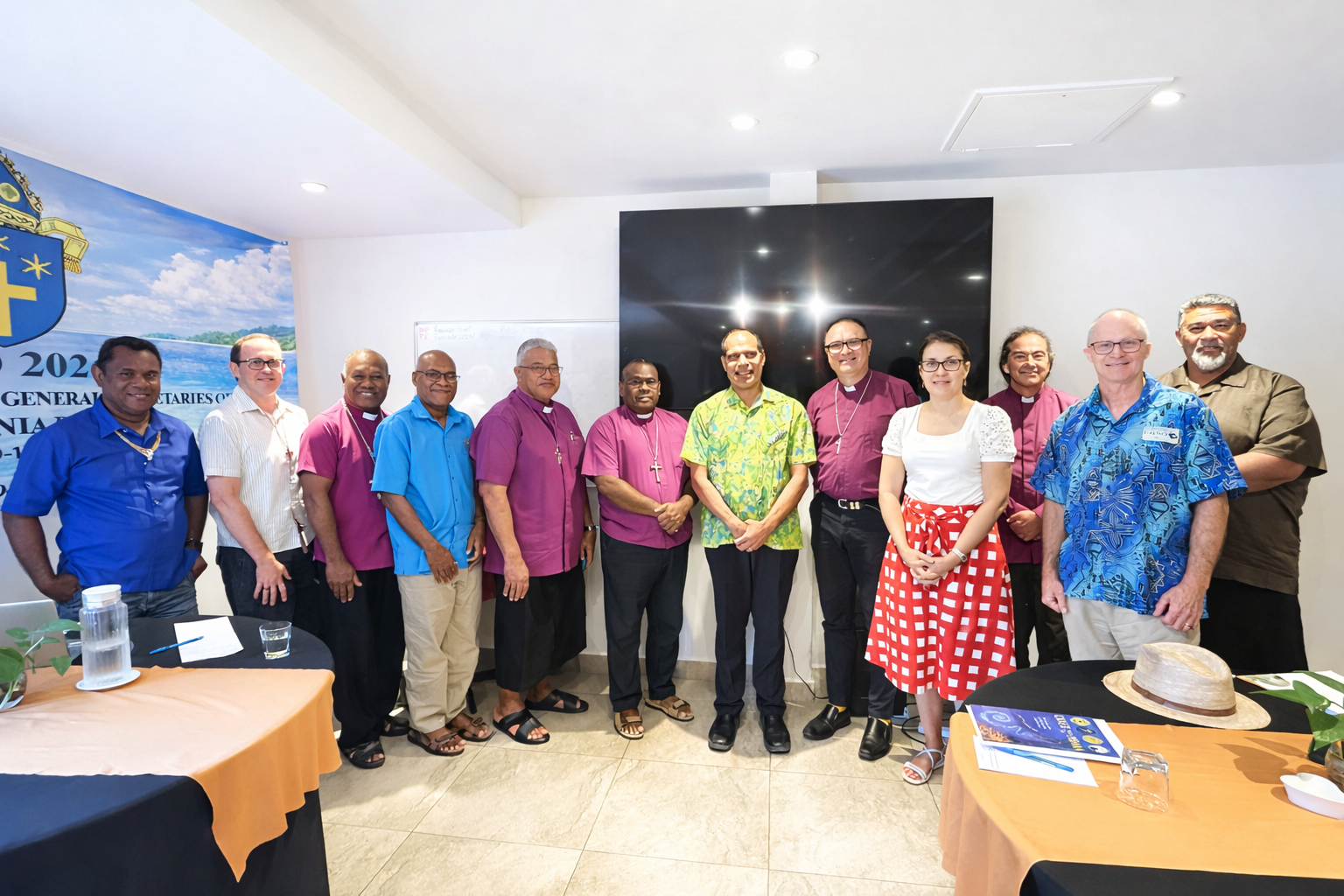
Vanuatu has highlighted its call for global climate justice and urgent international action, as Hon. Ralph Regenvanu Minister for Climate Change delivered a powerful address to FONO members in Port Vila from 9th to 12th last week.
“We did not cause this problem, but we are living its worst impacts,” Minister tells FONO gathering in Port Vila.
This is the gathering of all Anglican Primates and their General Secretaries in the Oceania Region.
Speaking at the Ramada Hotel, the Minister painted a sobering picture of a nation contributing almost nothing to global emissions, yet carrying a disproportionate burden of climate impacts.
“We know who caused the problem, and we know who is suffering from it,” he said.
“There needs to be reconciliation—those responsible must fix what they have caused.”
Drawing on scientific evidence from the Intergovernmental Panel on Climate Change, Hon. Regenvanu stressed that climate change is no longer a debated issue but a confirmed global emergency driven by fossil fuel emissions.
He pointed to worsening global conditions, echoing warnings from the United Nations that the world has moved beyond “global warming” into what has been described as “global boiling.”
For small island states like Vanuatu, the consequences are immediate and severe.
“We produce almost nothing in emissions, yet we face the full force of climate change,” he said.
The Minister recalled the devastation of past cyclones, including one event that caused damage equivalent to more than half of Vanuatu’s GDP, setting back national development efforts for years.
Despite decades of negotiations under the United Nations Framework Convention on Climate Change, the Minister expressed concern that global emissions continue to rise, while financial support for vulnerable nations remains insufficient.
He reaffirmed the Pacific’s leadership in advocating for the 1.5°C temperature limit under the Paris Agreement, warning that the target is now under serious threat.
“We are seeing slow progress globally, while the impacts on our people are getting worse every year,” he said.
Hon. Regenvanu highlighted Vanuatu’s bold leadership in pursuing international legal pathways to hold major emitters accountable.
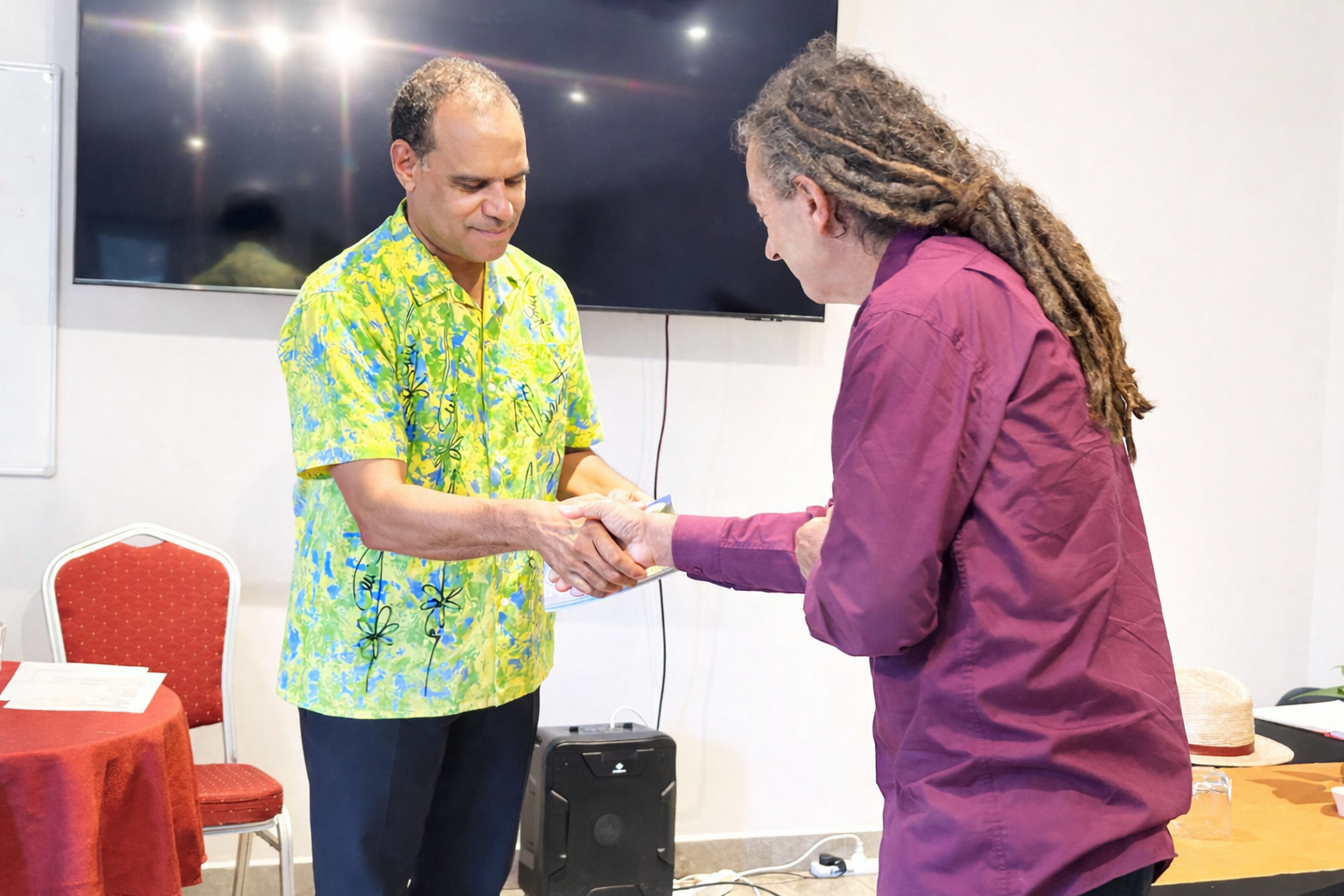
These efforts include engagement with the International Court of Justice, which recently affirmed that countries have legal obligations to address climate change, and that continued high emissions could be considered internationally wrongful acts.
“This gives us a very strong legal position. The world cannot ignore this anymore,” he said.
Vanuatu has also been at the forefront of pushing for a Fossil Fuel Non-Proliferation Treaty, alongside other Pacific nations.
While pushing for global accountability, the Minister emphasized that Vanuatu is also taking decisive action domestically.
The country is working towards 100 percent renewable electricity by 2032, supported by new solar and hydro projects. At the same time, efforts are underway to strengthen community resilience across all provinces.
“Our communities are on the frontline. We must make sure they are ready, prepared, and able to respond,” he said.
Key initiatives include:
• Establishing community-based climate and disaster committees
• Strengthening local government infrastructure to withstand extreme weather
• Enhancing early warning systems and communication networks
Hon. Regenvanu stressed that climate change is already affecting everyday life in Vanuatu—from water shortages to food security challenges—and warned that conditions will worsen.
However, he also noted a unique strength within Pacific communities.
“Our people understand climate change because they live it every day,” he said.
“That awareness is something many other countries do not yet have.”
The Minister concluded with a strong appeal for both national and international cooperation, urging leaders and communities alike to act decisively.
“Climate change is not just an environmental issue—it is about our survival, our sovereignty, and our future,” he said.